Wednesday, 10 October 2012

New Communication Technology Movie Assignment


Directed, written, edited by Kassie Kohary
Actor: David Govier

The trailer focuses on Chad (David Govier) and the aftermath of his breakup with his girlfriend.
In the beginning, whilst doing his homework, chad recieves a text from his girlfiend wanting to break up with him. Chad looking distraught after receiving the text, throws his textbook to the ground. After days of constant studying and isolation, Chad asks Siri (the app) for today's weather forecast, she quickly responds to him. So intrigued, Chad begins to ask Siri more questions about who she is, the meaning of life, what’s her favourite colour, food, asking for jokes, and even begins to flirt with Siri, as if she was a real person. In a montage, Chad is seen relying on Siri all the time as he talks to her everyday. Chad also looks like a much more happier person. In the final scene, where Chad is running in circles in a dreamlike state whilst talking to Siri. Chad then lays on the on the ground telling Siri to be with him forever.

This film showcases 'objectum sexuality', it's essentially a physiological disorder which is means love or sexual fetishism inanimate objects. Individuals who express this preference may feel strong feelings of attraction, love, and commitment to certain items or structures of their fixation. For some, sexual or even close emotional relationships with humans are incomprehensible. Because technology is so prominent in our society, there will be a small percentage of individuals who can't help but become strongly fixated and attracted to technological objects.

The whole movie was captured by using an IPad.
Song used: Air - Playground Love

Friday, 21 September 2012

Assignment Online Essay


“Let us imagine a nation in which everyone is hooked up to a network of VR infrastructure. They have been so hooked up since they left their mother's wombs. Immersed in cyberspace and maintaining their life by tele-operation, they have never imagined that life could be any different from that. The first person that thinks of the possibility of an alternative world like ours would be ridiculed by the majority of these citizens, just like the few enlightened ones in Plato's allegory of the cave.” (Zhai, 1998, p.82).

With the advent of technology, humans have found ways of utilizing technology to improve our standard of living. Amongst our technological advancements, we have the technology to manufacture human-like robots (humanoids) to replace/aid humans in various tasks. Humanoids, although once a fantastical notion derived from cyberpunk novels and films, has now become a reality, as they are now accessible to the public. The film ‘Surrogates’ represents a technologically advanced society where humanoids are considered being the social norm; with everyone owning and controlling a bot to navigate themselves through their daily lives. In this essay, we will be discussing how films like Surrogates are influenced by (based on) cyberpunk and current technological creations. These films also provide us an insight of possible outcomes of the future and what actions we must take to prevent human destruction.

‘Cyberpunk’ is a literary movement that occurred in the 1980s. Its main literary purpose is to combine elements of high tech and pop culture (both considered mainstream and underground at the time) and break down the separation between the organic and the artificial. The cyberpunk genre, in a sense, has greatly affected the content/literature in modern sci-fi novels and films, according to Erich Schneider (2004), Cyberpunk literature, in general, deals with marginalized people in technologically-enhanced cultural 'systems'.” The settings in cyberpunk novels usually depict a ‘system’ that dominates the lives of ordinary people: Systems range from an oppressive government, a group of large, paternalistic corporations or a fundamentalist religion (Schneider 2004). These systems are able to influence or even perhaps control the individual by using information technology (mass media and computers) this becomes the ‘cyber’ in cyberpunk. Technological systems can even go as far as to extend into its ‘human’ components, via brain implants (chips), prosthetic limbs, artificial (cloned) or genetically engineered organs, thus in a cyberpunk world, ‘humans themselves become the Machine’ (Schneider 2004). The ‘punk’ aspect in cyberpunk refers to the individuals that are considered outcasts, criminals or visionaries in cultural systems. They yearn for freedom for its own sake and believe that systems are oppressing their needs (i.e. George Orwell’s novel ‘1984’). Furthermore, cyberpunk literature centres these individuals and their plight on stopping corrupted systems, by using the system’s technological tools to their advantage (The Cyber Punk Project 2004).

‘Surrogates’ is a 2009 blockbuster film, based on a fictional, Sci-Fi comic book series of the same title. The film follows a detective, Tom Greer who lives in the year 2054, where everyone (including himself) controls humanoid robots known as surrogates from the comfort of their own homes. In this wired-up reality, people become so immersed with their cyber-substitutes that they pass along all their sensations – work, play and even sex – via virtual world (Boyle 2012). As incredibly far-fetch the film Surrogates may seem, the story contains intriguing elements from the cyberpunk genre: there is a system, a giant cooperation that distributes surrogates and a corrupted police department. There is also a counter group of humans that refuse to become hooked up to a machine and prefer their traditional standard of living. Detective Greer serves as an outcast or punk, who after witnessing a death of two people (whilst using their surrogate), Greer realises the consequences for using an android, as they are an easy target for murder. Greer’s marriage to his surrogate-orientated wife is also disintegrating, believing surrogates ruined their physical relationship.

The people behind the film Surrogates and futurists claim that the foundation of the film is based on our current technology and technological concepts (Saenz 2009). ‘Surrogates’ take a combination of nanotechnology, neuro-computing, robotics and advances in artificial/material science, and according to Dr James Canton (2010)Surrogates is clearly a near-future vision”, and that “in the future robots are going to start to look like humans…within 10 years you're going to have the world of the surrogates.” Moreover, behind this film’s typical Hollywood blockbuster action front, Surrogates is actually a thought provoking film, in the sense that it arouses issues regarding the dominance of technology (virtual world) and the endangerment of natural human existence. The film is also a representation of how our society is progressively becoming more superficial and artificial. The surrogates’ initial purpose was to protect, heal and to aid humans, however because of the human condition, surrogate technology is being wrongly misused, where its purpose is to feed our desires for the absolute. Surrogates are essentially seen as perfect, ideal representations of our selves; hence anyone can customise their androids to their own personal preference (Salton 2010). We can even go as far as constantly modifying them, treating our surrogates as if we were changing a Facebook profile picture or an online avatar. The surrogates are also designed to preserve the human race and protect us from immediate danger, however it is evident in the film that they sever natural, human interaction, which in-turn can jeopardise the human race. This poses the question; are surrogates really beneficial to our society or will they plunge us further to our own demise?

In contemporary society, we are currently facing an epidemic, with the rise of social networking and virtual gaming, people are becoming more involved with the virtual lifestyle, that they tend to lose themselves to cyberspace. We may not be aware of it, but it’s these virtual realities and networks that bring us closer to the Surrogate ‘reality’. When surrogates do become available to the mass public, without a doubt these fantasies and real-world desires would be lived out. Surrogates will become a lifestyle choice for individuals, either good or bad; it’s in our nature to improve, grow and experiment. However, like in the film, there will be individuals who will break away from the cyber world and recognise the consequences of ‘the Machine’. These punks will seize the movement and strive onward and upward, as this has been generally the case throughout human history, is that giant leaps of progress become the result of a very small group of intelligent, determined individuals.

References:

·       Zhai, P, 1998, Get Real: A Philosophical Adventure in Virtual Reality, Rowman & Littlefield Publishers, Inc. United States of America

·       Corley, A.M 2009, The Reality of Robot Surrogates, accessed on 10th September 2012 <http://spectrum.ieee.org/robotics/humanoids/the-reality-of-robot-surrogates>
·       Boyle, A 2012, The Science of ‘Surrogates’, viewed on the 10th September 2012 <http://www.globalfuturist.com/dr-james-canton/in-the-news/the-science-of-surrogates.html>
·       Salton, J 2010, Surrogate robots: more facts than fiction, viewed on 10th September 2012 <http://www.gizmag.com/surrogate-robots-fact--fiction/14330/>
·       The Cyber Punk Project, 2004, Cyberpunk as a science fiction genre, viewed on the 10th September 2012 <http://project.cyberpunk.ru/idb/scifi.html>
·       Saenz, A, 2009, Is Surrogates movie getting closer to reality, viewed on the 10th September 2012 <http://singularityhub.com/2009/08/07/is-surrogates-movie-getting-closer-to-reality/>

Friday, 7 September 2012

Item 2: Online Essay 1

Topic chosen:

Choose a cyberpunk story or movie. Compare the economic and social world it conjures with the real world today. How close is this imagined world to our world and are we moving towards the imagined world or away from it?

My experiences with Gaming (Response to Tutorial 7)


 Tutorial Discussion of Gaming Issues
  1. Read Henry Jenkins' required reading for this week. Which of the 8 Myths about video games has he least effectively debunked?
Video games do not encourage children to become violent, it’s actually the surroundings of the child: if he lives in a rough neighbourhood, witnessed/experienced abuse and violence in his household generally contributes to child’s mental stability.
  1. What was the first video game you played?
Hercules on Playstation 1
  1. What is your favourite video game?
Knights of the Old Republic II on PC
  1. Do you consider yourself a "Gamer"?  (What is a "Gamer"? Do casual games on your phone count?)
I enjoyed playing online games like mmorpgs in my early teens, but even back then I didn’t consider myself a hard-core gamer. These days, I’m too busy for gaming but I still continue to watch playthroughs online.
  1. Have you ever encountered a game that made you feel like you were spending too much time playing it?
Definitely, I used to play Runescape a lot, I would come home every day from school and jump straight on to it… wood cutting lvl 89 baby!
  1. Do you know anyone who is "addicted" to video games?
My two older brothers are pretty immersed in their games, as they stay in their rooms all day playing.
  1. Do video games have an adverse effect on players?
Yes, socially. I’ve noticed gamers are socially awkward. The majority of them find it hard to live everyday life without playing videogames because they live in situations they can’t control. They see video-games as a form of escape. 

Sunday, 2 September 2012

Youtube Mp3 Converter Petition (Week 6)


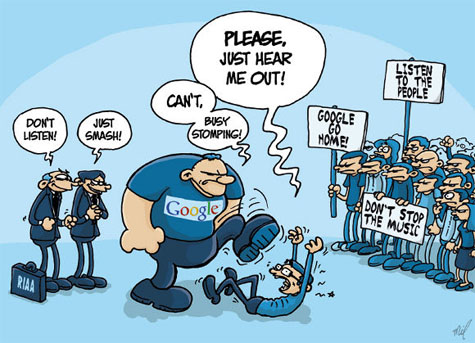
One day, whilst trying to download music via Youtube converter site Youtube to Mp3 this petition popped up, asking if I wanted to sign a petition to stop Youtube from suing the site. At first I ignored it, but then it appeared again, with Youtube (Google) denying me access to converting the Youtube clip to mp3 format, because they claim that it's 'stolen' content. This is NOT stolen content, the site is merely converting mp4s to mp3s—it's essentially a more legal approach to torrenting (pirating music). Anyways, it frustrated me to the point where I felt that it was time that I sign the petition to stop. I don't usually sign e-petitions because I feel that it's unnecessary and my contribution would be deemed insignificant. However, when I checked the site and saw that it has over 2million signatures, it impressed me seeing so many individuals around the world banding together to stop Google’s suppressing small companies.

To go into depth with this topic: Youtube (owned by Google) is without a doubt one of the largest video providers on the interwebs. It provides its users with free access to popular/trending videos, more importantly music on their site. Youtube claims to have been heavily affected by this Youtube converter site, claiming to lose revenue daily, due to the fact that their content is being ‘stolen’ from their site and created into mp3s. Mp3 converter is a simple site that allows its user to convert Youtube videos to Mp3s, that requires no membership, hence adding to it’s appeal; as people prefer being anonymous. The users are then allowed to listen to these mp3 conversions on their computer, phone or any music device, without the need to visit Youtube. It's these giant companies like 'Google' who want to dominant and control every inch of the Internet, as Philip the creator of the site stated “We would estimate that there are roughly 200 million people across the world that make use of services like ours and Google doesn’t just ignore all those people, they are about to criminalize them. With the way they are interpreting and creating their ToS every one of those 200 million users is threatened to be sued by Google.” While there are always two sides to every story, the content generated in this site doesn’t become the property of Google when the item is converted, and it’s main purpose to cater for the people and make life more convenient. And since I have a tendency to always support the underdog, I’m somewhat biased, as I portray Google as a major company oppressing the little guy (in this case, Mp3 Converter). Even if Youtube succeeds on shutting down its site, I doubt it’ll stop other Mp3 converter sites from emerging.

This e-petition currently needs 800k signatures and what better way to spread the word of this issue by posting it on my blog. As a community, we should come together and establish an e-forum, e-hacktivist group, or anything that will enable us stop major companies like ‘Google’ and even oppressive government regimes from suppressing the individual. The Internet is an impeccable communication tool; we should use it to our advantage.


If you want to sign the petition, click here

We can make a difference!


Enigma, 2012, Google Threatens To Sue Huge YouTube MP3 Conversion Site, accessed on the 4th September 2012 <http://torrentfreak.com/google-threatens-to-sue-huge-youtube-mp3-conversion-site-120619/> 

Betters, E 2012 " YouTube vid-conversion site launches petition against Google, dubs situation ‘David vs. Goliath’ accessed on the 4th September 2012 <http://9to5google.com/2012/07/05/owner-of-youtube-vid-conversion-site-launches-petition-against-google-dubs-litigation-david-vs-goliath-situation/>


Sunday, 19 August 2012

Online Survey (Tutorial Task 5)

You may now commence being surveyed.
*
*
*
*
*

Update: A total of 5 people took my survey. In this survey I found that the majority of the people surveyed said they spend more than 6 hours online. Youtube and Facebook are the most visited sites for social networking needs, they relied Google as their web search engine and preferred Ebay as their purchasing sites. These results came to no surprise. 

Plato's Allegory of the Cave (Adapt or Die: Mentioned in Lecture 4 & Tutorial 5)

The Allegory of the Cave’ was an interesting concept that was brought up in the lecture. This allegory was essentially about the people living in a cave who were isolated from the outside world. These people were trapped and the only image they could see was shadows. One day, a cave-dweller released from the chains confining him and escaped to the outside world. It was there he saw many wonders (this relates to the cyber world). However when he returned to tell the others of his newly discovered findings, they refused to believe him, and labelled him as an outcast. This allegory reminded me of an article I read online about how companies like Blockbuster and Borders are currently in bankruptcy, because they couldn’t compete with the rise of the online market. Borders lost much of their revenue to Amazon (internet megastore) which sells the most e-books online and Blockbuster to Netflix, a highly successful web company that allows its users to view movies anytime anywhere, especially online. Like the people living in the cave, Blockbuster and Borders refused to evolve and merge into the online market. So needless to say, they got themselves in this unfortunate position and a substantial amount of debt. An example of Blockbuster’s supposed ignorance: Blockbuster declined partnership with the starting, baby company Netflix in 2002, who now dominates entertainment (movies, TV shows) in the virtual world. So in order to strive in business you must learn to adapt, because technology and the internet plays a major role on how this society operates. And as a race, we evolve overtime. In this sense, business becomes an extension of our humanity, as we are constantly trying to look for ways on improving ourselves and the lives of others. However, that being said, if major businesses decide to emerge to different types of markets, they might end up dominating the entire world, choose Google for example. Google has consistently extended it's market, even going as far as knowing someone's blood-type, thus being labelled the 'anti-Christ' -- since too much knowledge can be deemed dangerous.


References
Kreis, S. 2004, Plato: The Allegory of the Cave, viewed 17th August 2012 <http://www.historyguide.org/intellect/allegory.html>

Themorningcall, 2011, Borders, Blockbuster lessons show businesses must evolve, viewed on the 17th of August 2012 < http://articles.mcall.com/2011-06-14/opinion/mc-ecommerce-schlossberg-yv-0615-20110614_1_netflix-blockbuster-borders>

Meadows, C. 2011, Borders and Blockbuster: two of a kind? Viewed on the 17th of August 2012 < http://www.teleread.com/ebooks/blockbuster-and-borders-two-of-a-kind/>

Herscher, P. 2011, “If Video killed the radio star, who killed Borders?” viewed on the 17th August 2011 < http://www.firstrain.com/marketmine/if-video-killed-the-radio-star%E2%80%A6who-killed-borders-2.html >